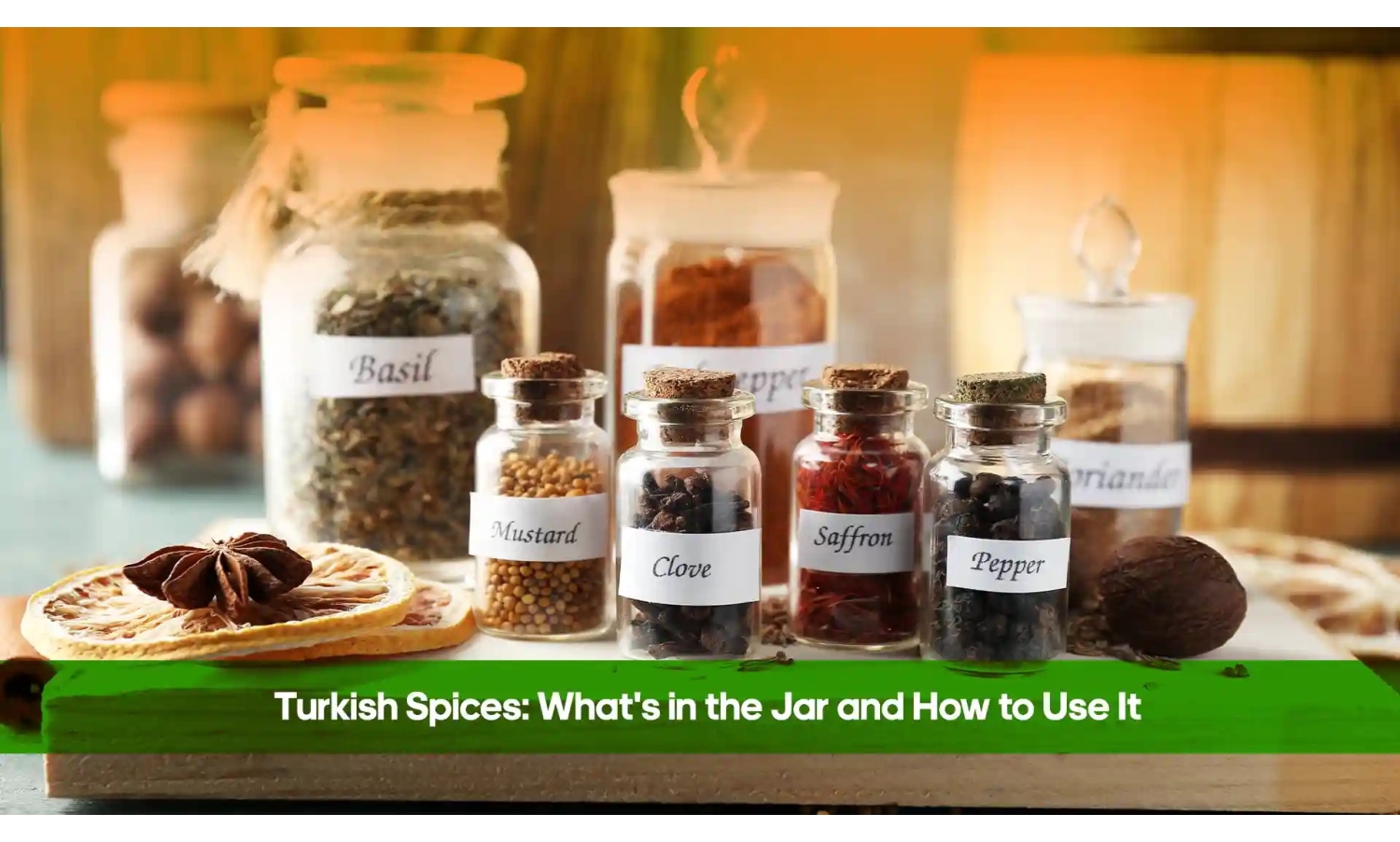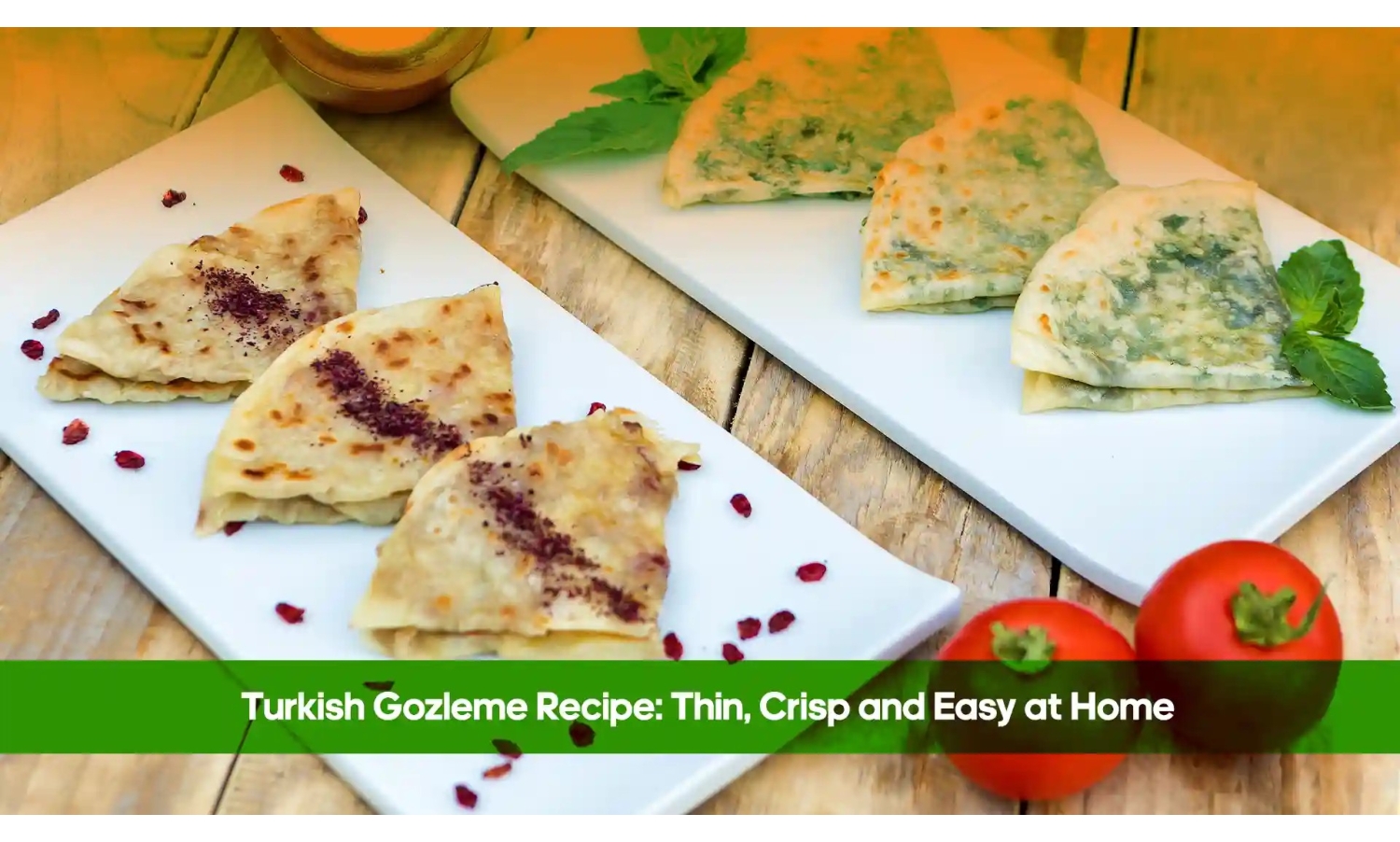

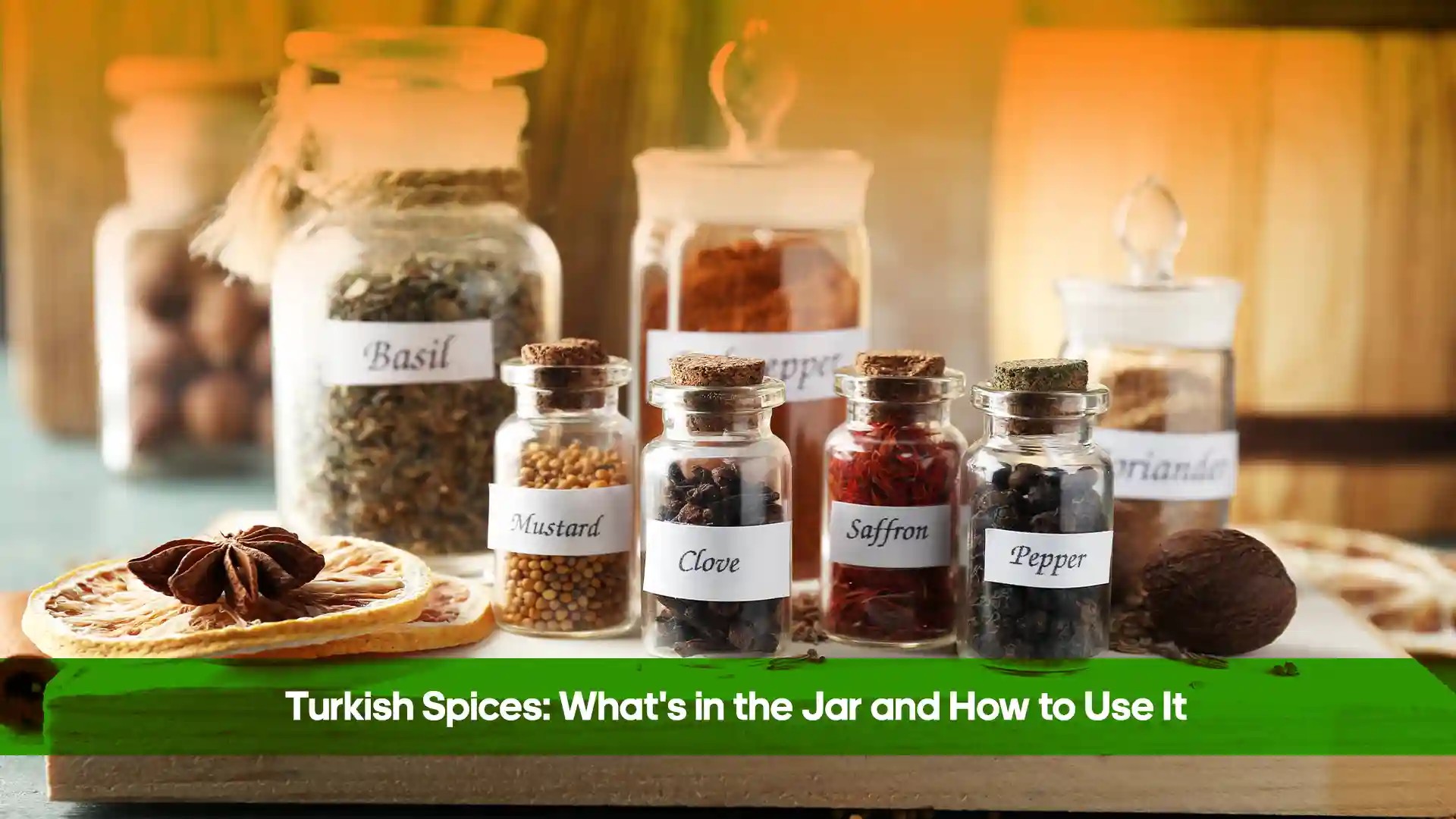
Turkish spices come down to a short list that does a lot of work: red pepper flakes, sumac, dried mint, cumin, oregano, black pepper and a handful of blends. A Turkish kitchen uses most of them every day, and none of them is hard to find in the UK.
This guide covers what each one tastes like, how the different chilli flakes compare, which blends are worth buying, and how much to put in a kilo of mince. Most supermarket recipes skip that last part.
The short answer: the most common Turkish spices
If you buy six jars, make them these. The common Turkish spices in almost every home are pul biber (red pepper flakes), sumac, dried mint, cumin, dried oregano and black pepper. Add Urfa chilli if you like smoky flavours, and allspice and cinnamon if you cook rice and stuffed vegetables. With those you can cook most everyday Turkish dishes.
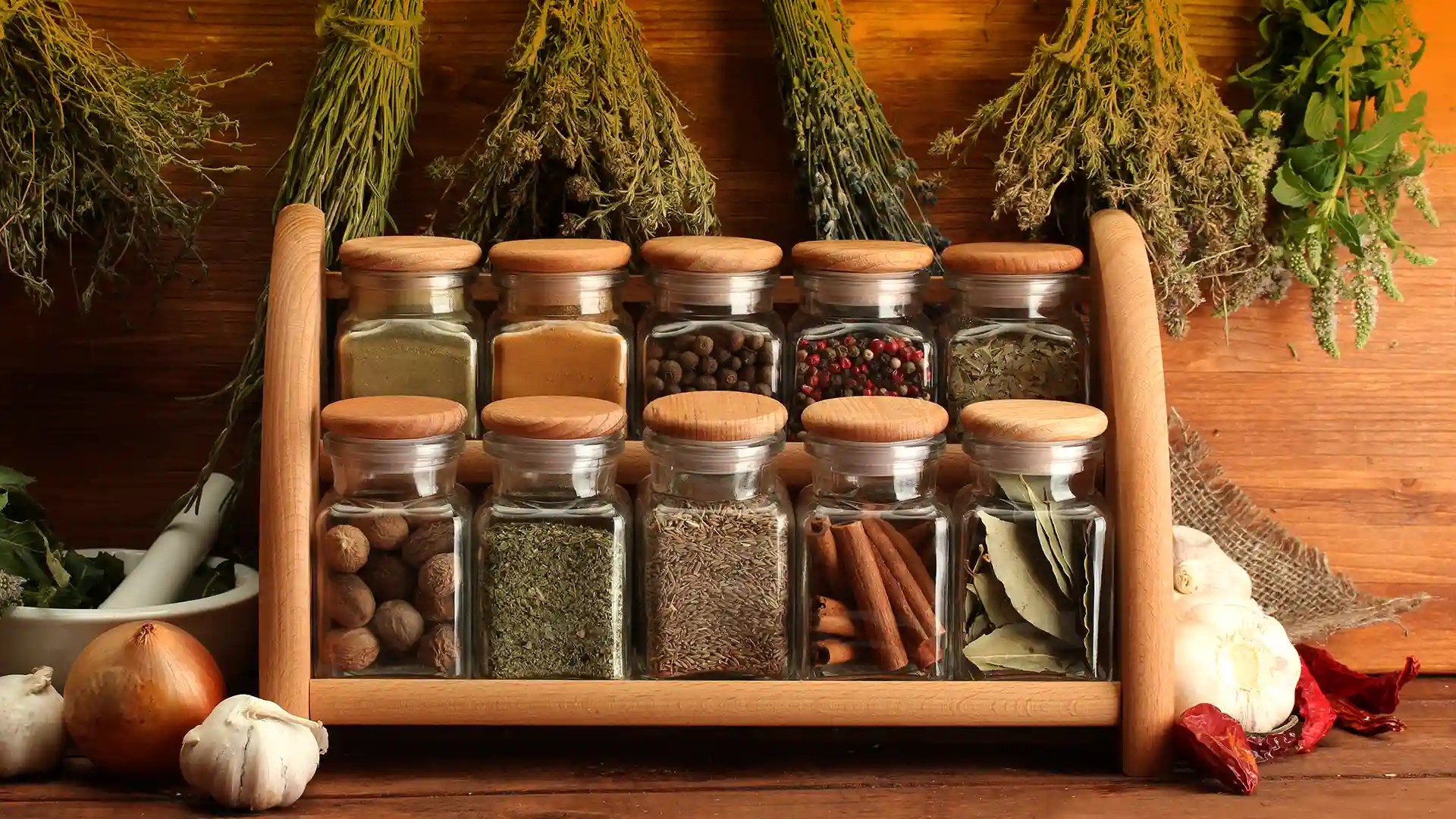
Turkish spices at a glance
| Spice | Tastes like | Heat | Use it for | Swap if you run out |
|---|---|---|---|---|
| Pul biber (red pepper flakes) | Fruity, gently warm, slightly salty | Mild to medium | Eggs, soups, kebabs, dips, the table shaker | Sweet paprika with a pinch of cayenne |
| Maras chilli flakes | Bright, oily, fruity | Medium | Meatballs, salads, sauces | Pul biber |
| Urfa chilli flakes | Smoky, raisin like, almost chocolatey | Mild, slow building | Lamb, aubergine, yoghurt dips | Smoked paprika with a pinch of chilli |
| Sumac | Sour, lemony, a little fruity | None | Onions, salads, grilled meat | Lemon zest and a pinch of salt |
| Dried mint | Cool, sweet, herbal | None | Yoghurt, lentil soup, potato | Fresh mint, finely chopped |
| Cumin | Warm, earthy | None | Meatballs, beans, spiced sausage | Ground coriander, though it's milder |
| Dried oregano | Herbal, peppery | None | Lamb, chicken, grilled vegetables | Dried thyme |
| Allspice | Clove like, sweet | None | Rice, stuffed vegetables, slow cooked meat | A small pinch of cloves and cinnamon |
Turkish red pepper flakes: pul biber, Maras and Urfa chilli
Turkish red pepper flakes are the spice you'll notice first. They sit in a shaker on every kebab shop counter, and they go into far more Turkish dishes than any other spice apart from salt and black pepper. Among Turkish spices there are three main kinds of flake, and they don't swap one for one.
Pul biber, the flakes on every table
What is pul biber? The name just means "flake pepper". It is red pepper that has been dried, usually with the seeds removed, and crushed into coarse flakes, often with a little salt and oil. It is milder and fruitier than the crushed chillies sold in most UK supermarkets, which is why Turkish cooks use it by the spoonful rather than the pinch. Bags of pul biber are usually labelled hot or mild. In the UK you will also see it sold as Aleppo pepper, a name taken from the Syrian city where the same style of pepper is grown.
Maras and Urfa chilli
Maras chilli comes from the south of Turkey. It is brighter red, oilier and a touch hotter than ordinary pul biber, and many cooks prefer it in meatballs.
Urfa chilli is a different thing altogether. The peppers are dried in the sun by day and wrapped up at night so they sweat, which turns them a deep purple black and gives them a smoky, raisin like taste. The heat is gentle at first and builds slowly. Try a pinch on fried eggs or stirred into thick yoghurt with garlic.
Sumac: sour, red and no heat at all
What is sumac spice made from? It is the dried, ground berry of the sumac shrub, Rhus coriaria, which grows wild across Turkey and the Middle East. The powder is a deep reddish purple and tastes sour and lemony, with no heat at all. In Turkish kitchens it does the job lemon does elsewhere, adding sharpness without adding liquid. When a dish needs sourness with a little sweetness as well, cooks reach for pomegranate molasses instead.
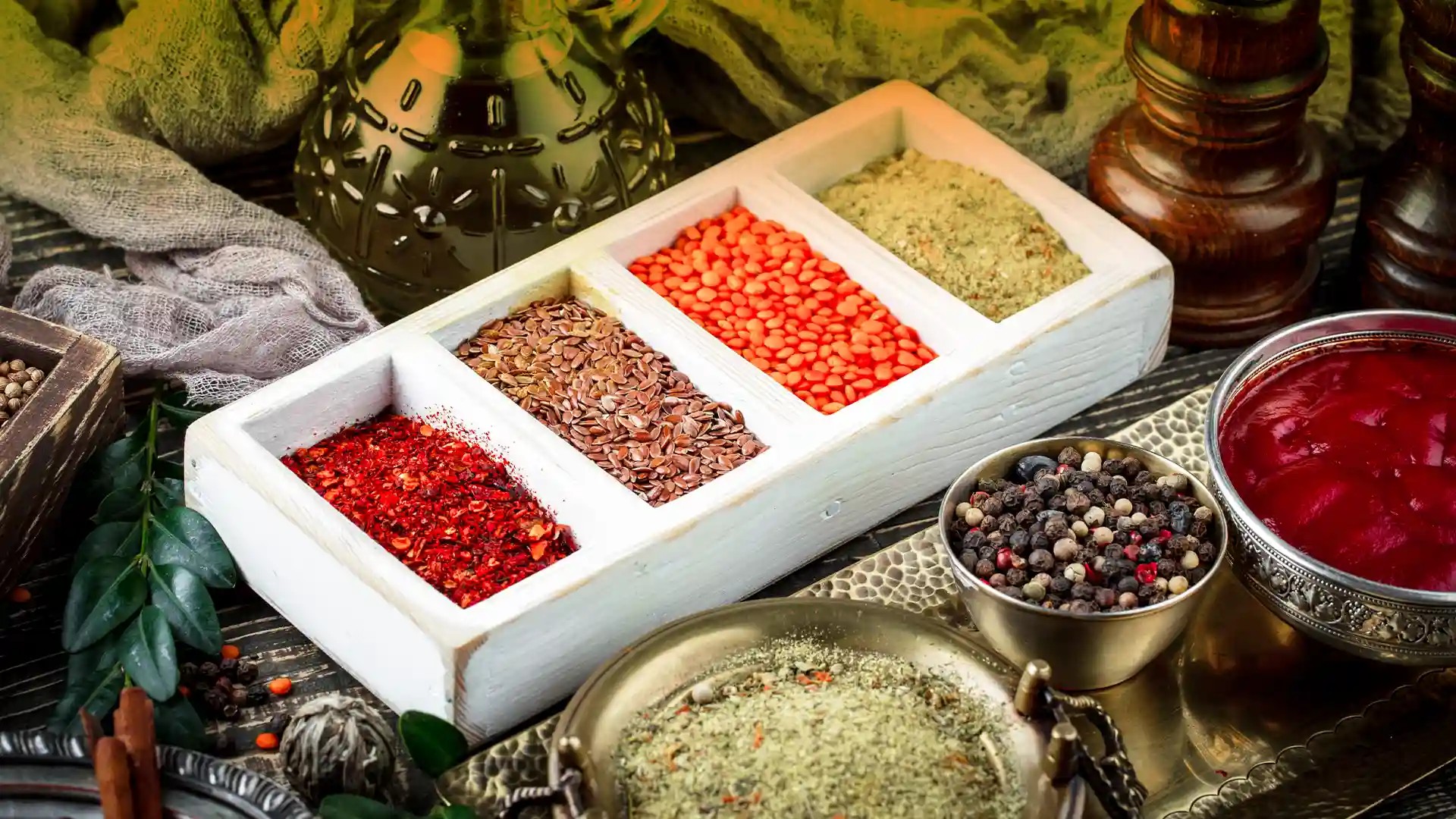
The classic use is the onion salad that comes with every grilled kebab. Slice a red onion thinly, rub it with a pinch of salt for a minute, then toss with a heaped teaspoon of sumac and a handful of chopped parsley. It also goes over a chopped tomato and cucumber salad, fried eggs, grilled chicken and roast vegetables.
One note: the edible sumac sold as a spice is not the same plant as poison sumac. Buy it from a shop rather than picking it yourself.
Dried mint, oregano and cumin
The other spices used in Turkish cooking every day are humbler but just as important. Dried mint is used more than fresh in Turkish homes. A teaspoon fried in butter for a few seconds and poured over red lentil soup is one of the best things you can do with a jar of it. It also goes into yoghurt with cucumber and garlic, and the potato filling in a Turkish gozleme recipe.
Turkish oregano is wilder and more peppery than the Italian kind. It goes on lamb chops, grilled chicken and tomato salads. Cumin is the warm, earthy note in meatballs, spiced sausage and dried bean stews. Use it carefully, because too much makes everything taste the same.
Turkish spice blends worth knowing
Spice shops in Turkey sell ready made mixes for particular dishes, and the names on the bag rarely tell you exactly what is inside. In practice, Turkish spice blends fall into a few familiar types:
- Meatball spice mix: usually cumin, black pepper, pul biber, paprika and dried herbs
- Kebab spice mix: heavier on red pepper, with cumin and sometimes sumac
- Chicken spice mix: paprika, garlic, oregano and black pepper
- Seven spice mix: a warm blend of black pepper, allspice, cinnamon, cloves, cumin, coriander and nutmeg, used in rice and slow cooked meat
Ready made blends of Turkish spices are handy. Mixing your own takes two minutes and lets you control the salt. For a simple meatball blend, combine 2 tsp ground cumin, 2 tsp pul biber, 1 tsp black pepper, 1 tsp sweet paprika and 1 tsp dried oregano. That's enough for about 1kg of mince. Keep it in a small jar.
Turkish spices for meat: how much to use
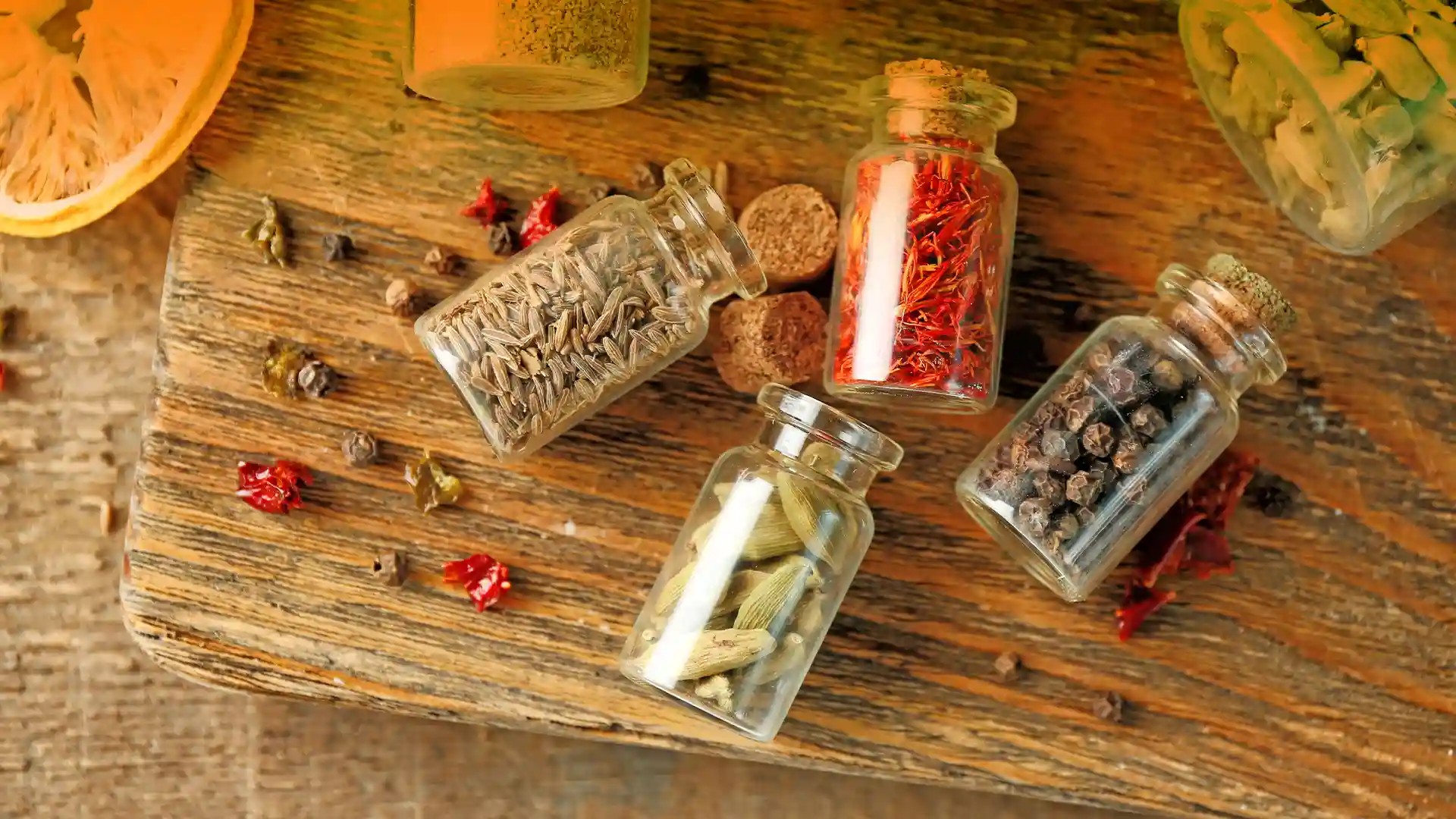
This is where most recipes go vague. The table below gives a starting point for Turkish spices for meat, per 500g, before salt. Season with about 1 tsp fine salt per 500g and adjust from there.
| Dish | Spices per 500g of meat | Notes |
|---|---|---|
| Meatballs (beef or lamb mince) | 1 tsp cumin, 1 tsp pul biber, ½ tsp black pepper, ½ tsp dried oregano | Add grated onion and a handful of breadcrumbs |
| Adana style kebab (lamb mince) | 2 tsp pul biber or Maras chilli, 1 tsp Urfa chilli | Fattier mince holds the spice better |
| Chicken shish (thigh) | 1 tsp sweet paprika, 1 tsp pul biber, ½ tsp cumin, 1 tsp dried oregano, 2 tbsp yoghurt | Marinate for at least 2 hours, ideally overnight |
| Lamb chops | 1 tsp dried oregano, ½ tsp black pepper | Sprinkle pul biber at the table instead |
| Lamb stew | 1 tsp black pepper, ½ tsp allspice, 1 tsp pul biber | Add the pul biber in the last 10 minutes |
| Spiced sausage style patties | 1½ tsp cumin, 1 tsp pul biber, ½ tsp allspice, 2 garlic cloves | A quick home take on Turkish spiced sausage |
Turkish seasoning at the table
A lot of Turkish seasoning happens after the food is served. In a kebab restaurant you'll find salt, pul biber and sometimes sumac on the table, and people add their own. At home, a small dish of pul biber and another of dried mint next to the soup pot does the same job. It means a dish can be cooked mild for children and spiced up by everyone else.
Buying and storing Turkish spices in the UK
UK supermarkets now stock a few Turkish spices, usually sumac and Aleppo pepper in small jars. Turkish grocers sell the same spices in larger bags that work out far cheaper per gram, along with the things supermarkets rarely carry, such as Urfa and Maras chilli, meatball spice mixes and good dried mint. Robin Food stocks Turkish spices and delivers across the UK, with same day delivery in London on orders placed by 3pm.
Whatever Turkish spices you buy, smell them first. Good pul biber smells sweet and peppery, sumac smells sharp, and mint should smell of mint. If a jar smells of dust, it will taste of dust.
Store ground spices in airtight jars, away from the hob and out of sunlight. Most keep their flavour for six months to a year. Pul biber and Urfa chilli hold up better in the fridge in summer because of the oil in them. If you buy a large bag, decant a small jar for daily use and keep the rest sealed.
Frequently asked questions
Is Turkish food spicy?
Not usually. Most Turkish spices are about flavour rather than heat, and the chilli is generally mild. The south and south east of Turkey, around Adana and Urfa, is where food gets hotter.
Is pul biber the same as chilli flakes?
They are similar, but pul biber is milder, fruitier and slightly oily. Ordinary supermarket chilli flakes are hotter and drier, so use about half as much if you are swapping.
What can I use instead of sumac?
Lemon zest with a little salt gets you close. It won't give the same colour.
Which Turkish spices should a beginner buy first?
Pul biber, sumac and dried mint. Between them they cover eggs, salads, soups, grilled meat and yoghurt dips.
How long do Turkish spices last?
Ground spices are at their best for six to twelve months. Whole seeds such as cumin last longer if you grind them as you need them.