
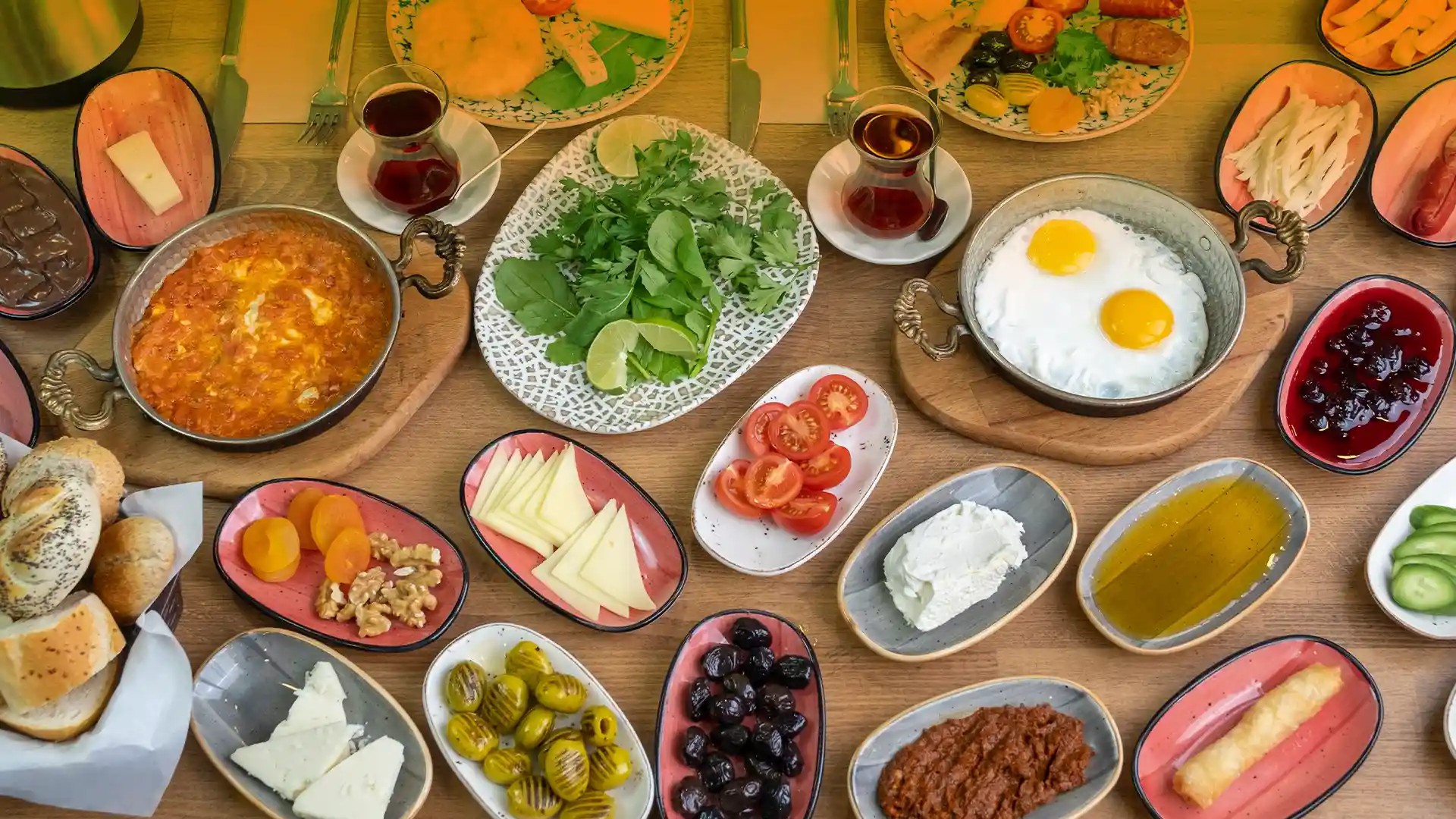
A traditional Turkish breakfast is a table of small plates: white cheese, olives, tomatoes, cucumber, honey, jam, eggs, warm bread and a pot of tea that never seems to run dry. In Turkey it can go on for two hours at the weekend. In a British kitchen on a Saturday, an hour is more realistic, and an hour is plenty.
Below you'll find what goes on a traditional Turkish breakfast table, which cheeses to buy, how much four people actually get through, and how to get everything out at once without the eggs going cold.
The short answer
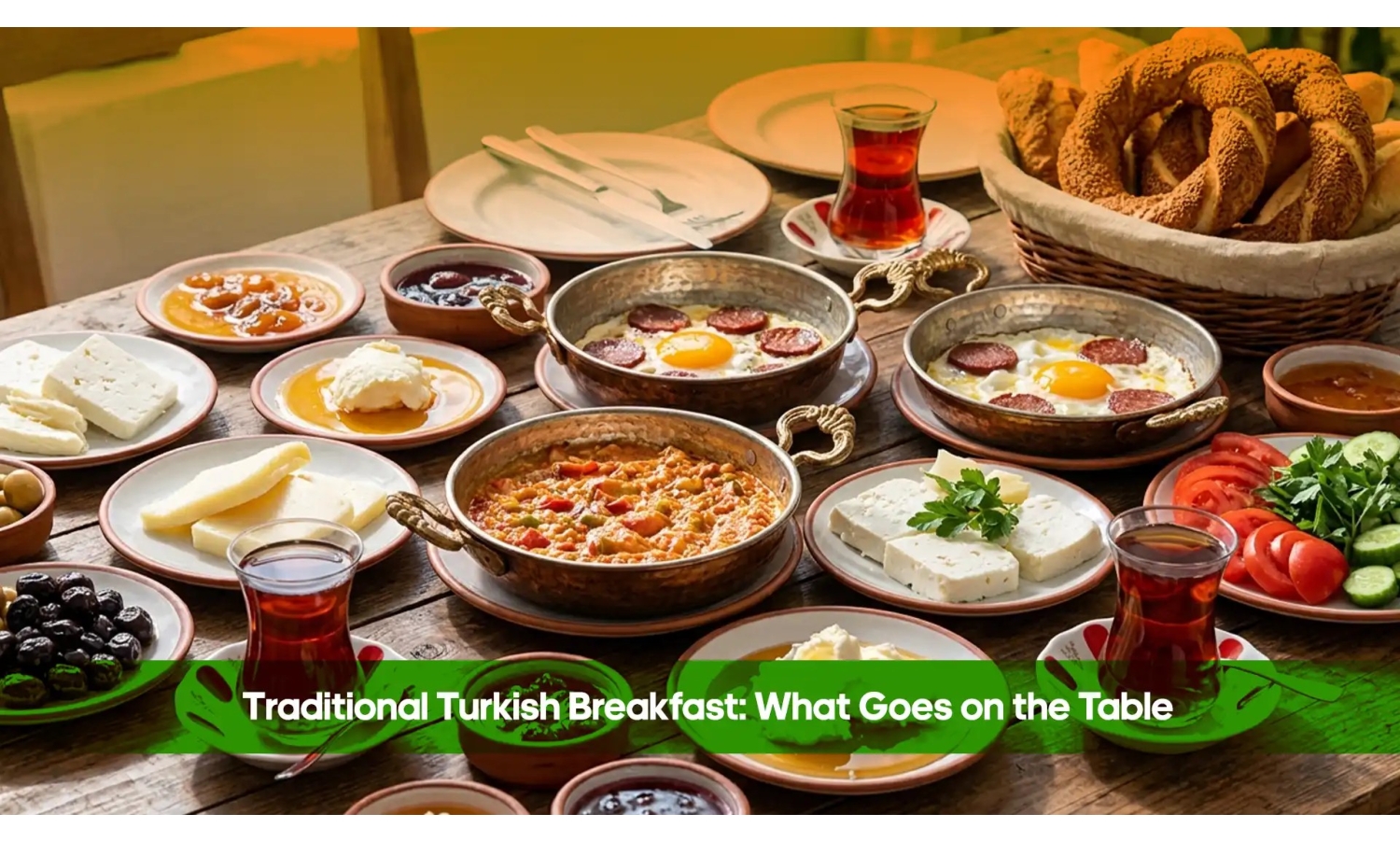
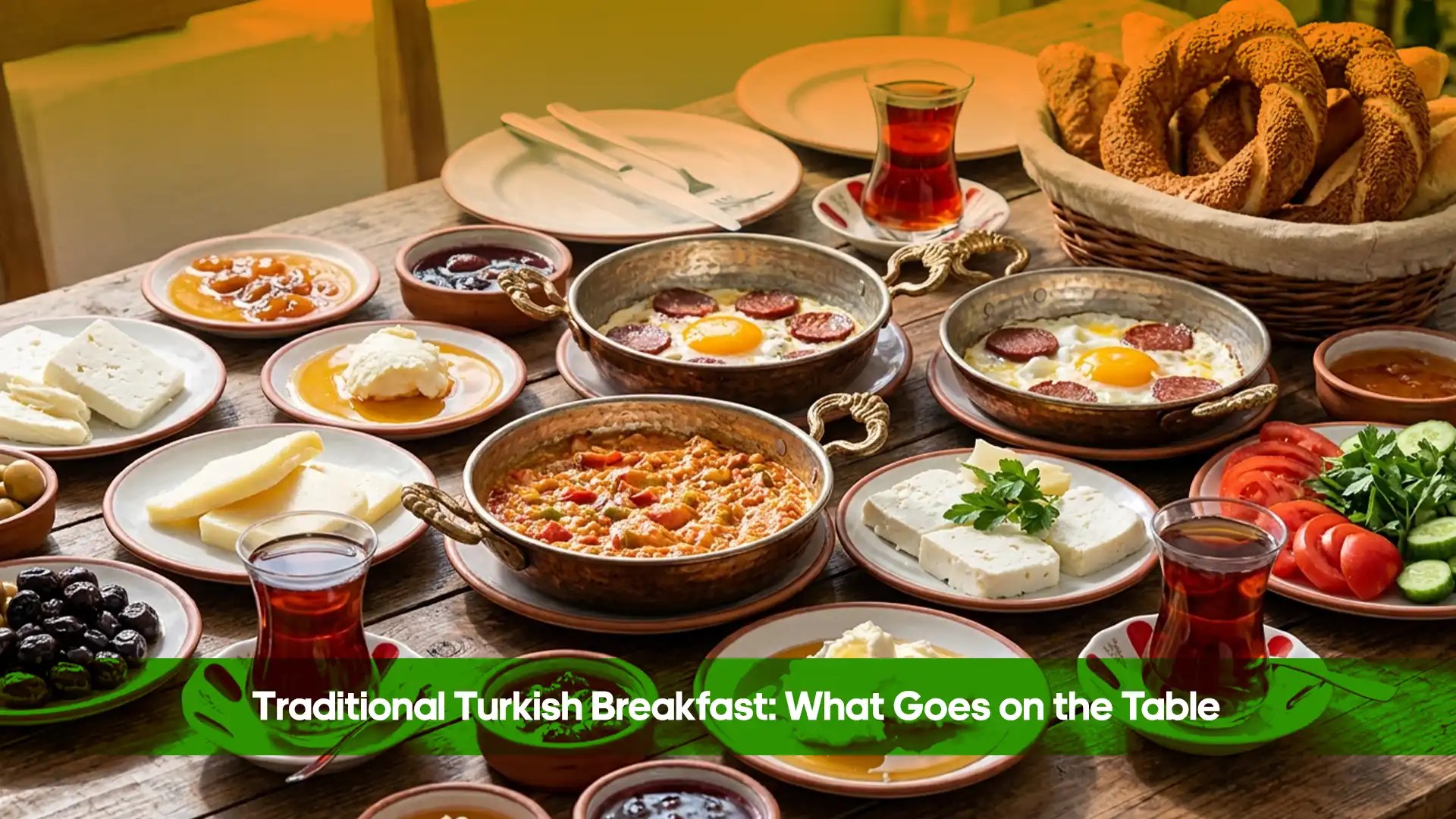
What is a Turkish breakfast, exactly? A traditional Turkish breakfast is a spread of cold dishes (cheese, olives, raw vegetables, honey, jam, butter) served with bread and black tea, plus one hot dish such as fried eggs or spiced sausage. Everyone picks from the middle. There is no set order and no main course, and on weekends nobody is in a hurry to get up.
Traditional Turkish breakfast foods, plate by plate
Most traditional Turkish breakfast foods fall into a handful of groups. You don't need every single one. A good table has something salty, something fresh, something sweet and something hot.
Bread
Bread does a lot of the work at a traditional Turkish breakfast. A fresh white loaf is normal at home, and sesame crusted bread rings are the usual bakery buy. Some families add soft savoury buns or flaky, buttery rolls. Whatever you buy, warm it in the oven for a few minutes.
Cheese
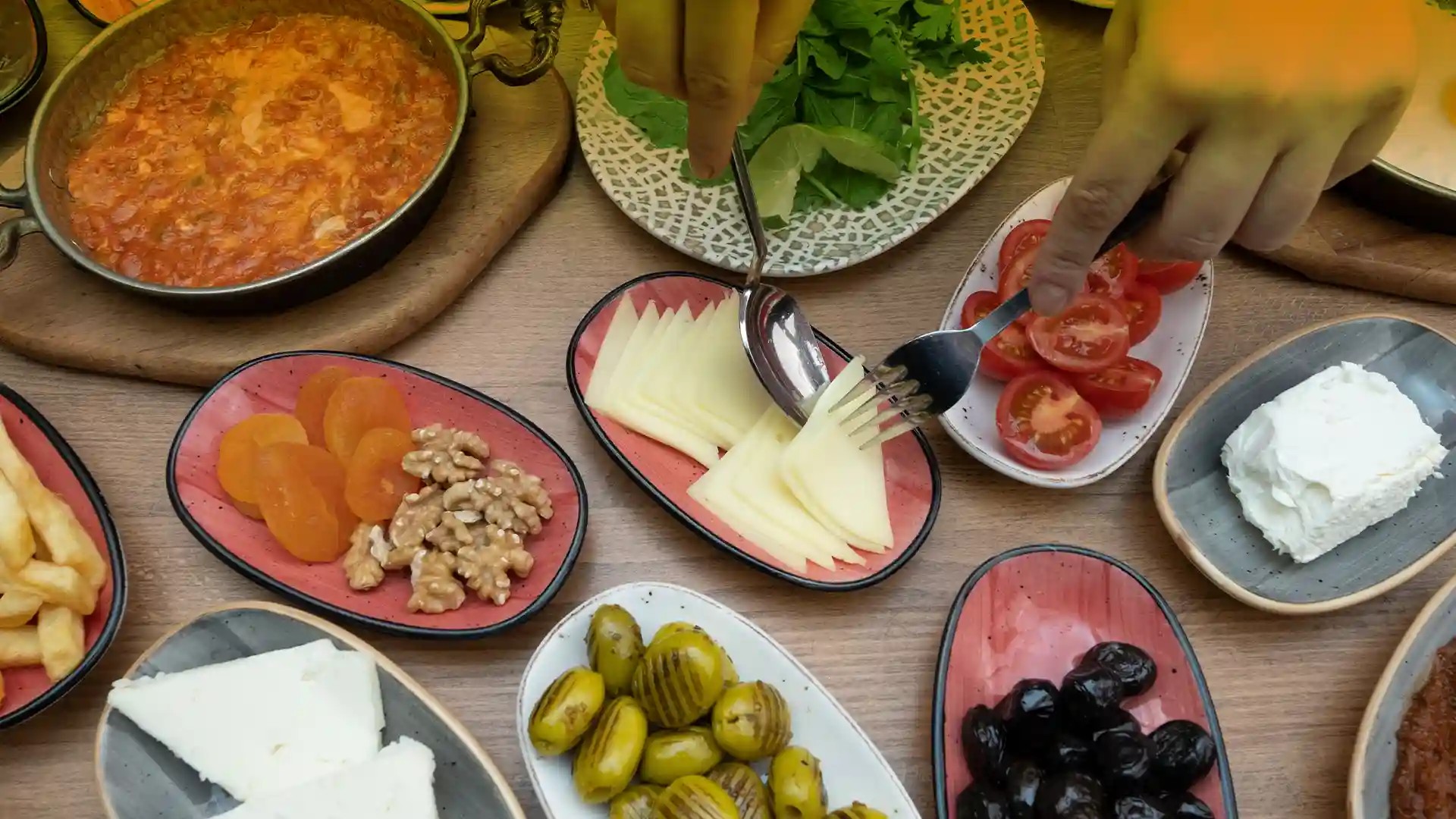
At least two cheeses, usually three. A brined Turkish white cheese turns up on nearly every table, with a slab of mild yellow cheese beside it. There is a full guide further down.
Olives
Black and green, side by side. Small, wrinkled black olives are the classic choice. Green olives from the Aegean coast are often cracked and dressed with lemon and oil.
Fresh vegetables
Sliced tomatoes, cucumber cut into long wedges, and thin green peppers. In summer a few sprigs of rocket, parsley or mint go on the same plate. Olive oil and a pinch of salt is all the dressing they need.
Sweet things
Honey, often with a thick Turkish clotted cream that British readers will find very close to the Cornish kind. Then jams: sour cherry, fig, apricot, rose petal or quince. Many tables also have a little dish of tahini mixed with grape molasses, which tastes a bit like peanut butter stirred into treacle.
Something hot
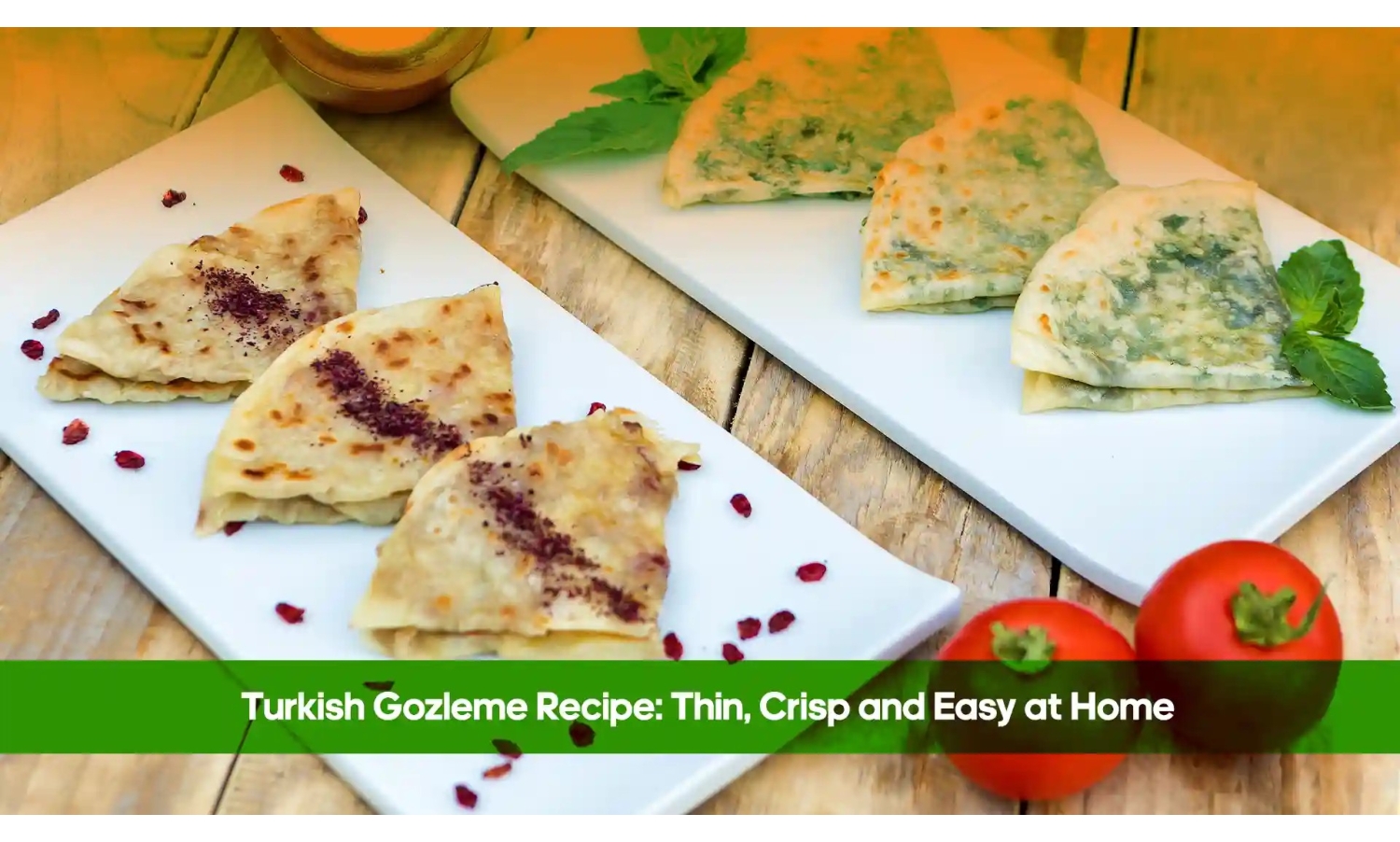
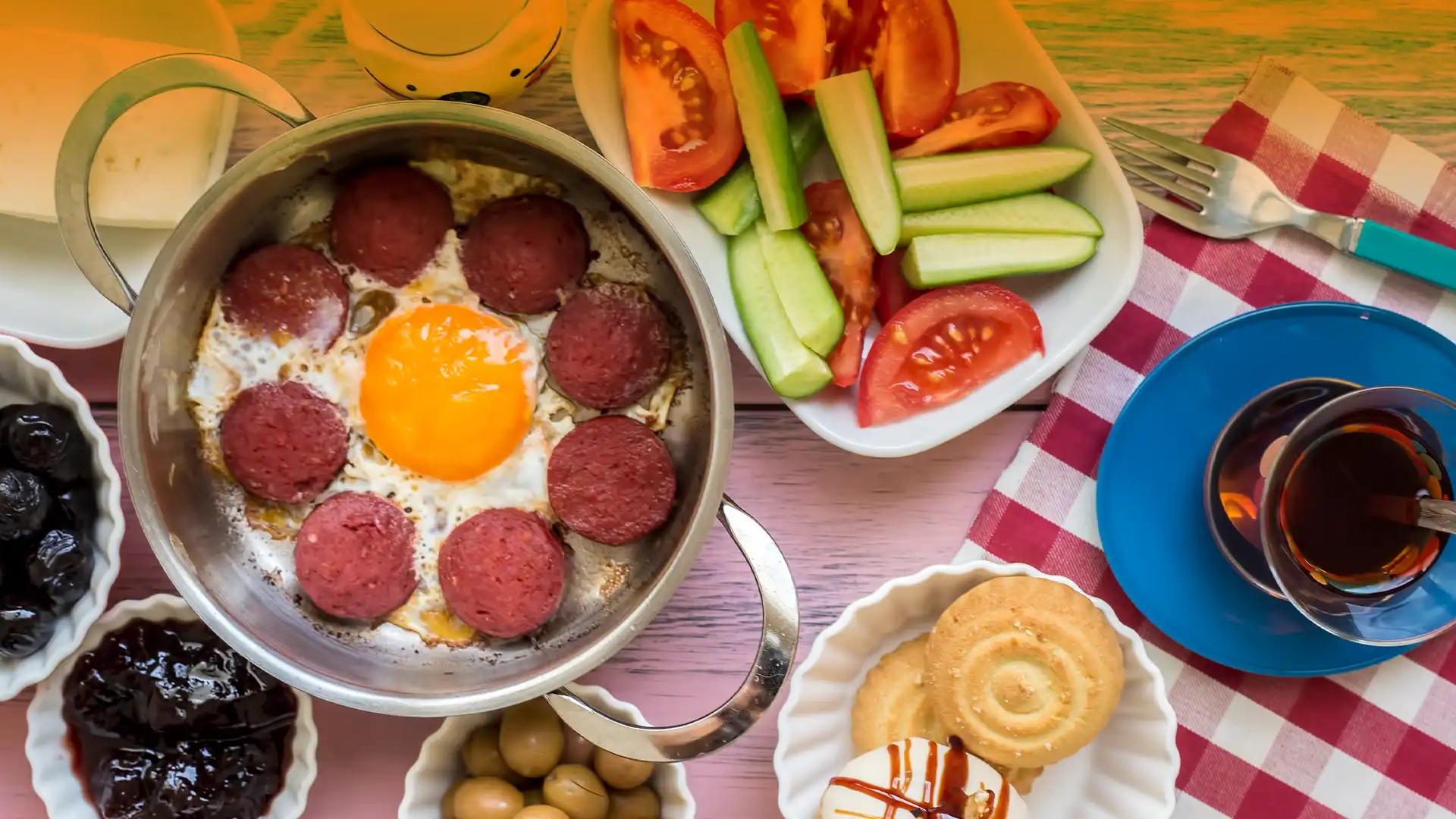
Fried eggs are the easy option. Eggs cooked in a small pan with slices of spiced beef sausage are the weekend favourite. A soft scramble of eggs, tomatoes and peppers appears a lot as well, and our Turkish scrambled eggs recipe shows how to get it right in a British kitchen. Thin rolls of pastry filled with cheese and fried until crisp come out when someone has time.
Tea
Strong black tea, brewed in a two tier teapot and poured into small tulip shaped glasses. Each person adjusts the strength with hot water from the bottom pot. Coffee, if it comes at all, comes after the plates are cleared. To end the morning properly, learning how to make Turkish coffee at home takes about five minutes.
Turkish breakfast cheese: what to buy
If you change one thing about how you shop for a traditional Turkish breakfast, make it the cheese. Supermarket feta will do at a push, but proper Turkish breakfast cheese is milder and creamier than most Greek feta sold in the UK, and you can taste the difference on a plain slice of bread.
| Cheese | What it is | Taste and texture | How it is served | Closest swap in a UK supermarket |
|---|---|---|---|---|
| Turkish white cheese | Brined cheese, cow's or sheep's milk | Salty, creamy, sliceable | Sliced, with tomato and olive oil | Mild feta, soaked in water for 20 minutes |
| Yellow cheese | Semi hard cow's milk cheese | Mild and springy; aged versions are sharper | Sliced cold, or melted in a toastie | Young Gouda |
| Aged sheep's cheese | Sheep's or goat's cheese aged in a casing | Crumbly, strong, tangy | A spoonful, often with honey or walnuts | A crumbly aged ewe's cheese |
| Braided string cheese | Plaited cheese, often with black seed | Stringy and salty | Pulled apart into strands | Plaited string cheese |
| Whey cheese | Fresh, soft cheese made from whey | Soft, mild, barely salted | With honey, or mixed with herbs | Ricotta |
| Herb cheese | Cheese packed with wild herbs, from eastern Turkey | Salty, green, herby | The centrepiece of an eastern Turkish breakfast | No real substitute |
If your white cheese tastes too salty, soak the slices in cold water for 15 to 20 minutes before serving. Plenty of Turkish cooks do this as a matter of habit.
Plates, platters and regional spreads
In a Turkish café you will usually be offered one of two formats. One is a single plate per person with a little of everything. The other is the full spread, where dozens of small dishes cover the table and everyone shares. A Turkish breakfast platter at home sits somewhere between the two: one or two large boards for the cold items, and small bowls for honey, jam and olives.
The traditional Turkish breakfast also changes from region to region. Van, in the far east, is famous for its breakfast houses, where herb cheese, clotted cream and honey sit next to a buttery pan dish of flour and egg. Along the Black Sea the hot dish is often cornmeal cooked in butter with stringy cheese melted through it. In Gaziantep you might get a paper thin pastry filled with pistachios and cream. And in Izmir people start the day with small, oily pastry buns and a boiled egg.
How to make a Turkish breakfast at home
A Turkish breakfast at home is mostly shopping and slicing. The actual cooking takes about ten minutes. The table below is a rough shopping list for a traditional Turkish breakfast for four hungry adults on a weekend morning.
| Item | For 4 people | Notes |
|---|---|---|
| Turkish white cheese | 300g | Buy a block, not ready crumbled |
| Yellow cheese | 200g | Slice thinly |
| Olives, green and black | 250g in total | Rinse, then dress with oil, lemon and a pinch of chilli flakes |
| Tomatoes | 4 medium | Ripe ones, sliced just before serving |
| Cucumbers | 2 small or 1 large | Wedges rather than rounds |
| Green peppers | 4 | Long, thin sweet peppers rather than bell peppers |
| Eggs | 8 | Two each, fried or cooked with sausage |
| Spiced beef sausage | 1 ring, about 250g | Optional |
| Bread | 4 sesame bread rings or 1 large loaf | Warm at 180°C for 4 to 5 minutes |
| Honey and clotted cream | 1 jar and 1 pot | Serve together in one dish |
| Jam | 2 flavours | Sour cherry and fig are safe choices |
| Loose black tea | 4 to 5 tablespoons | Enough for a large two tier teapot |
That list of Turkish breakfast ingredients looks long, but most of it keeps. Cheese, olives, honey, jam and tea will last you several weekends. The only things you need to buy fresh are the vegetables, the bread and the eggs.
A timing plan that works
The night before, put the olives in a bowl with their oil and lemon, and decant the honey and jams. That's it. Don't slice anything.
In the morning, start the tea first, because it needs 10 to 15 minutes to brew properly. Slice the cheese and soak the white cheese if it needs it. Cut the vegetables, set out the cold dishes and warm the bread. The eggs go on last, once everyone is already sitting down.
Where to shop in the UK
A supermarket gets you about halfway: tomatoes, cucumbers, eggs and honey. For the cheese, olives, sausage, clotted cream and sesame bread rings, a Turkish grocer is worth the trip. North London has plenty along Green Lanes and in Dalston, and most big cities, including Birmingham and Manchester, have at least a few. If there isn't one near you, Robin Food delivers Turkish groceries across the UK, with same day delivery in London on orders placed before 3pm.
Turkish breakfast ideas for busy weekdays
Not every morning can be a full traditional Turkish breakfast. These Turkish breakfast ideas take less than ten minutes:
- A toasted sesame bread ring with white cheese, tomato and a few olives
- A yellow cheese toastie made in a dry frying pan, with a glass of tea
- Whey cheese or white cheese with honey and chopped walnuts on toast
- Tahini and grape molasses on warm bread, which children tend to love
- Boiled eggs with cucumber, tomato and a pinch of dried mint
Vegetarian and vegan options
Most Turkish breakfast foods are already vegetarian. Leave out the sausage and you're there. If animal rennet matters to you, check the label on the cheese.
A vegan traditional Turkish breakfast is easier than it sounds. Keep the olives, vegetables, jams, grape molasses and tahini, then add a few dishes from the same kitchen: a red pepper and walnut dip, a bowl of hummus, and a pan of fried potatoes with peppers and onion. Use olive oil instead of butter on the bread. The table still looks generous.
Frequently asked questions
What do Turks drink with breakfast?
Black tea, nearly always. Coffee usually comes after the meal rather than with it.
Is a traditional Turkish breakfast healthy?
It can be. Most of the table is vegetables, olives, eggs and cheese. The salt from cheese and olives adds up quickly, though, and honey, jam and white bread are easy to overdo.
What time is a traditional Turkish breakfast eaten?
On weekdays it is short and early. On weekends people often sit down at around 10am and stay put for a long time, which is why it gets compared to brunch.
Can I prepare a traditional Turkish breakfast the night before?
Partly. Olives can be dressed, honey and jam put into bowls, and the table laid. Leave the tomatoes, cucumber and cheese until the morning so they stay fresh.
How is a traditional Turkish breakfast different from a full English?
A full English is mostly hot food on one plate. A traditional Turkish breakfast is mostly cold dishes shared from the middle of the table, with one hot dish at most.