
Most of Britain has an unfair idea of this sweet, and it usually comes from one bad experience. A dusty hexagonal tin at Christmas, a rose flavour like a bar of soap, a texture somewhere between a rubber and a boiled sweet.
The real thing is not remotely like that. Soft enough to yield under a fork, fragrant rather than perfumed, and often stuffed with so many nuts that the sugar is barely the point. The gap between the two is enormous, and knowing which is which is mostly a matter of reading a label properly.
Where it came from
The sweet is genuinely old. The version most people recognise is usually traced to a confectioner working in Istanbul in the late eighteenth century, whose shop is still trading under the family name today, which is a fairly remarkable run for a sweet shop.
It reached Britain in the nineteenth century, got renamed by an English traveller who could not manage the original, and turkish delight has been slightly misunderstood here ever since.
Why the tin version tastes wrong
Mass market versions cut corners in two places. They use artificial flavouring instead of real rosewater or citrus, and they stiffen the texture with excess starch so the cubes survive a supply chain designed for chocolate bars.
The result keeps for eighteen months and tastes like it intends to. Real turkish delight is softer, shorter lived and a completely different eating experience.
What is turkish delight made of
The honest answer to what is turkish delight made of is not complicated. Sugar, water, cornflour and cream of tartar, cooked slowly for well over an hour until the starch gelatinises and the mixture turns translucent, then flavoured, set, cut and dusted.
That slow cooking is the whole craft. Rush it and the starch never develops, which gives the chalky, grainy texture that put so many people off. The list of turkish delight ingredients is short enough that there is nowhere to hide a shortcut.
Traditional producers talk about cooking the mixture for ninety minutes or longer at a low simmer. Industrial lines do it in a fraction of that time, and the difference is entirely in the bite.
Worth knowing if you avoid gelatine: proper recipes never contain it. The set comes from starch alone, which makes the classic version suitable for vegetarians and, when made traditionally, halal. Some cheaper imitations do add gelatine, so the ingredients list is still worth a glance.
The varieties worth knowing
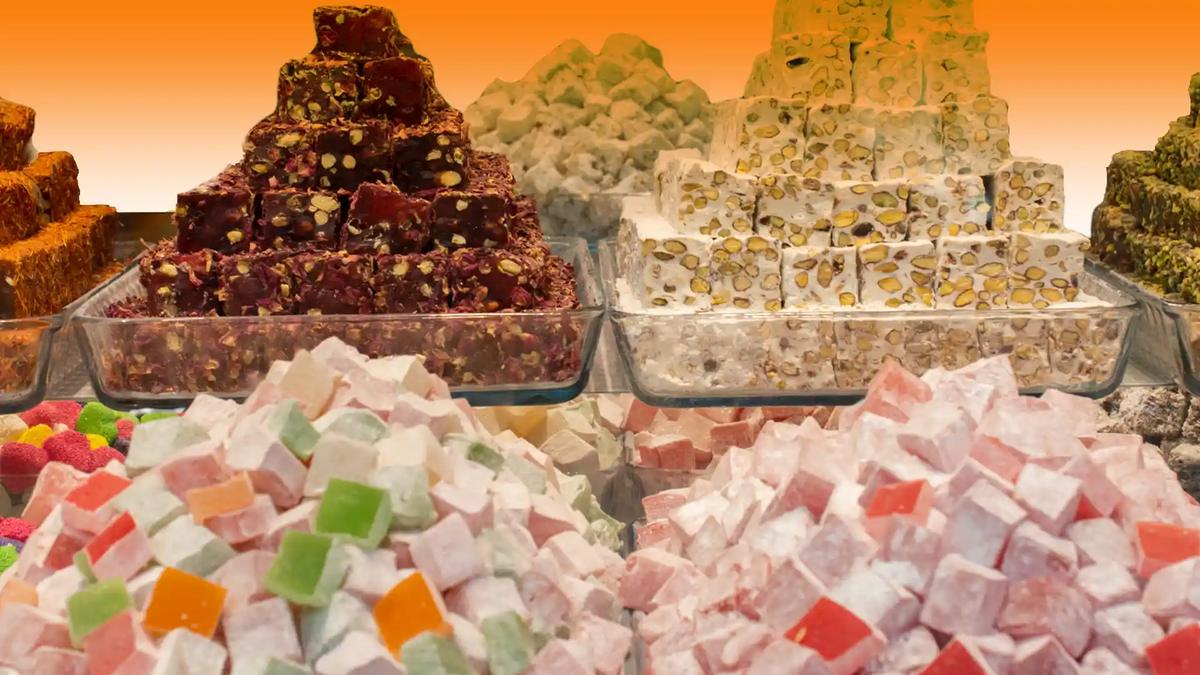
Plain and citrus
Lemon, bergamot and orange are the everyday flavours in Turkey, and they are far more common there than the floral ones Britain associates with the sweet. Bergamot in particular is gorgeous, a sort of grown up Earl Grey note that works beautifully with coffee.
Nut filled
This is where it gets serious. Pistachio turkish delight is the benchmark, and the good stuff contains whole nuts in generous quantity rather than a few sad fragments suspended in sugar.
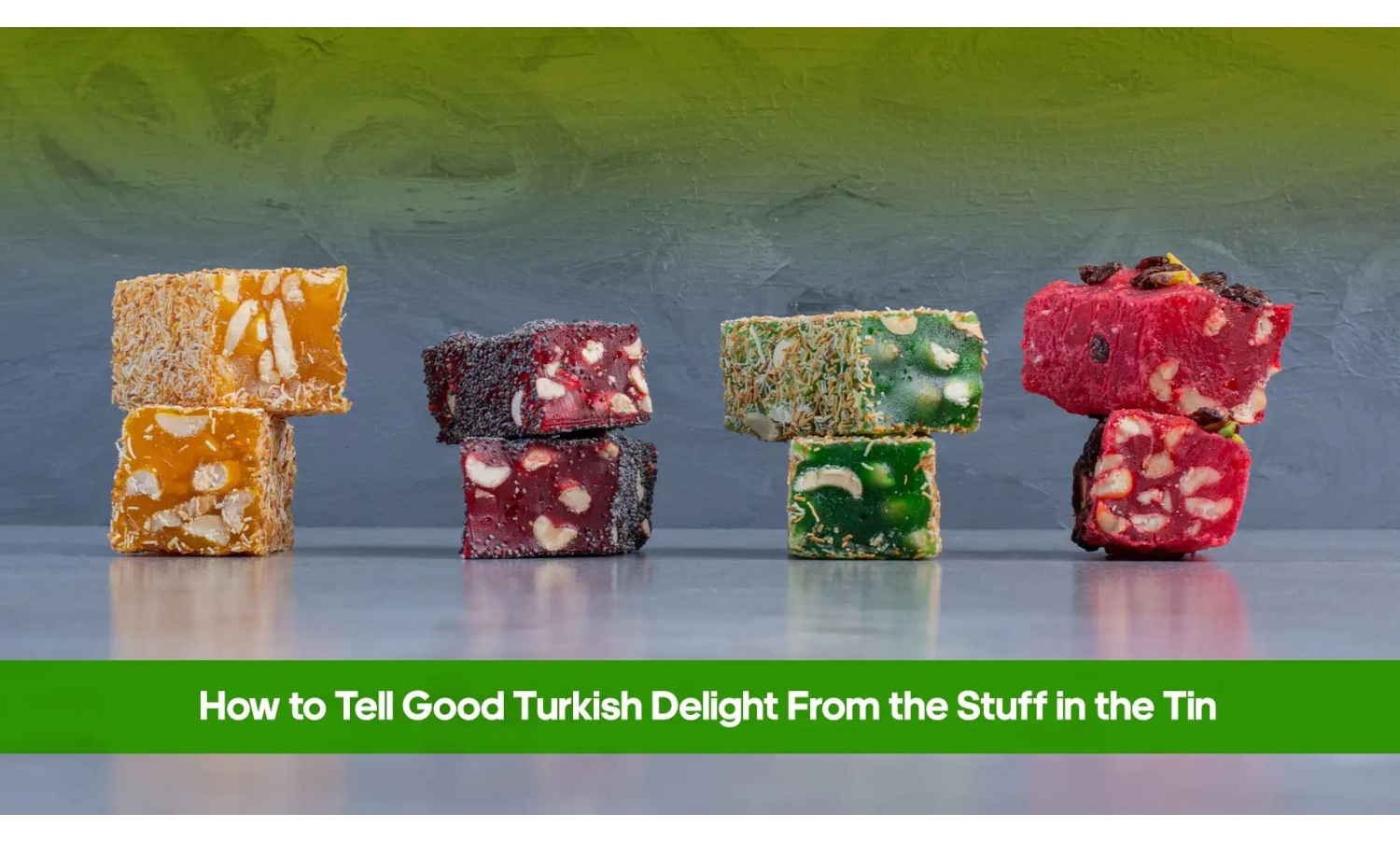
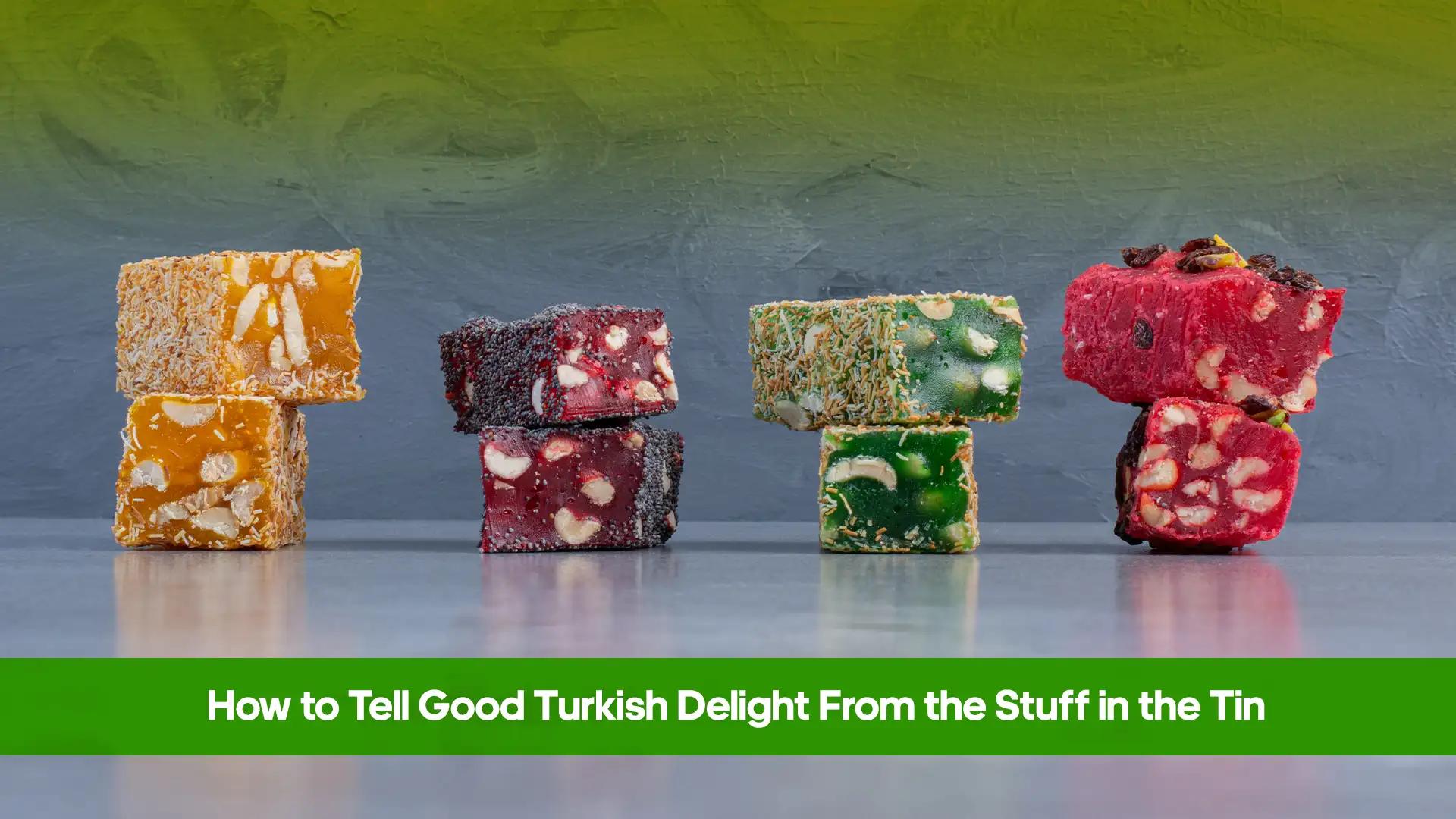
Look at the cut face of the cube. If the pistachios are packed tightly enough that the sweet is holding them together rather than the other way round, you have found a good one. Walnut and hazelnut versions exist too, but pistachio turkish delight remains the one people actually queue for.
Floral
Rose turkish delight has a bad reputation here and it is not entirely deserved. Made with real rosewater in a restrained hand it is delicate and slightly fruity. Made with synthetic flavouring it tastes like a bathroom cabinet.
If rose is the only version somebody has tried, that is probably why they think they dislike the sweet entirely. A single piece of properly made rose turkish delight tends to change minds fairly quickly.
Modern styles
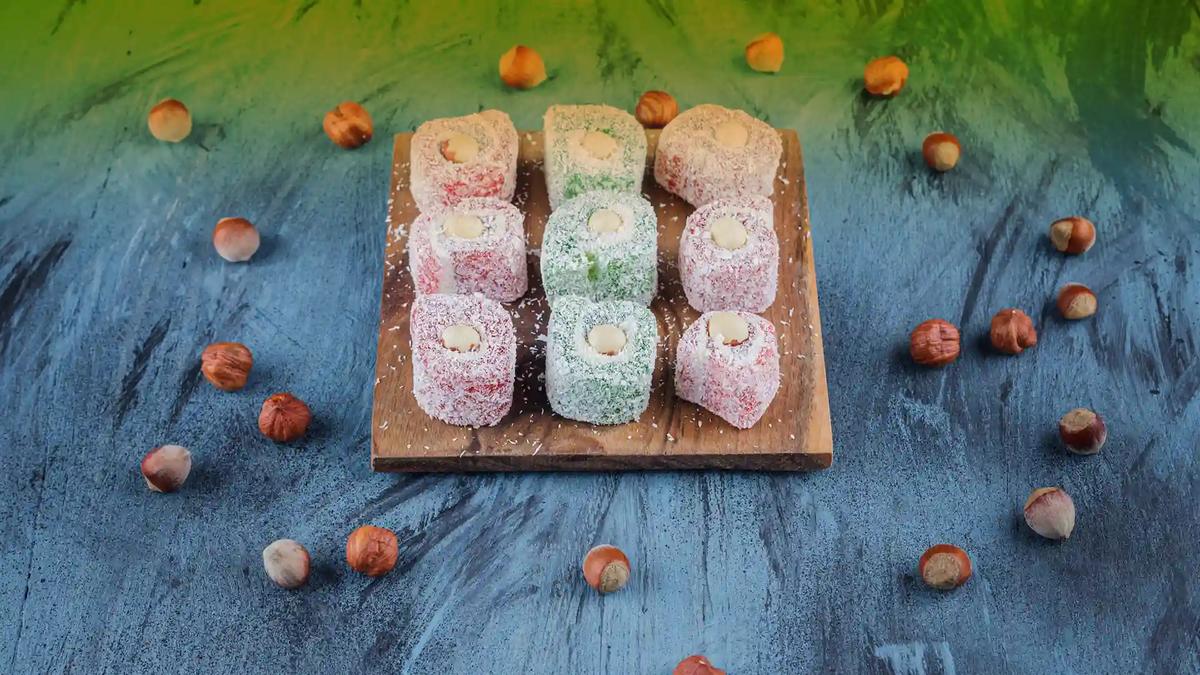
Double roasted versions, chocolate coated cubes, pomegranate and fig, and the enormous rolled logs studded with whole pistachios that get sliced at the counter. Traditionalists grumble, everyone else keeps buying them.
Reading a label like somebody who knows
A few quick checks separate the good from the ordinary, and none of them require any expertise.
- Cornflour or starch should appear high in the list, and gelatine should not appear at all.
- Real flavourings are named as rosewater, lemon oil or bergamot, not as flavouring.
- Nut content above twenty percent is a good sign, and above thirty is excellent.
- A shelf life measured in months rather than years usually means less starch and more sugar craft.
The dusting matters too. It should be icing sugar and cornflour, light enough to tap off, and a thick white crust is usually hiding a dry cube underneath. Good turkish delight ingredients never need camouflage.
Storing it and serving it
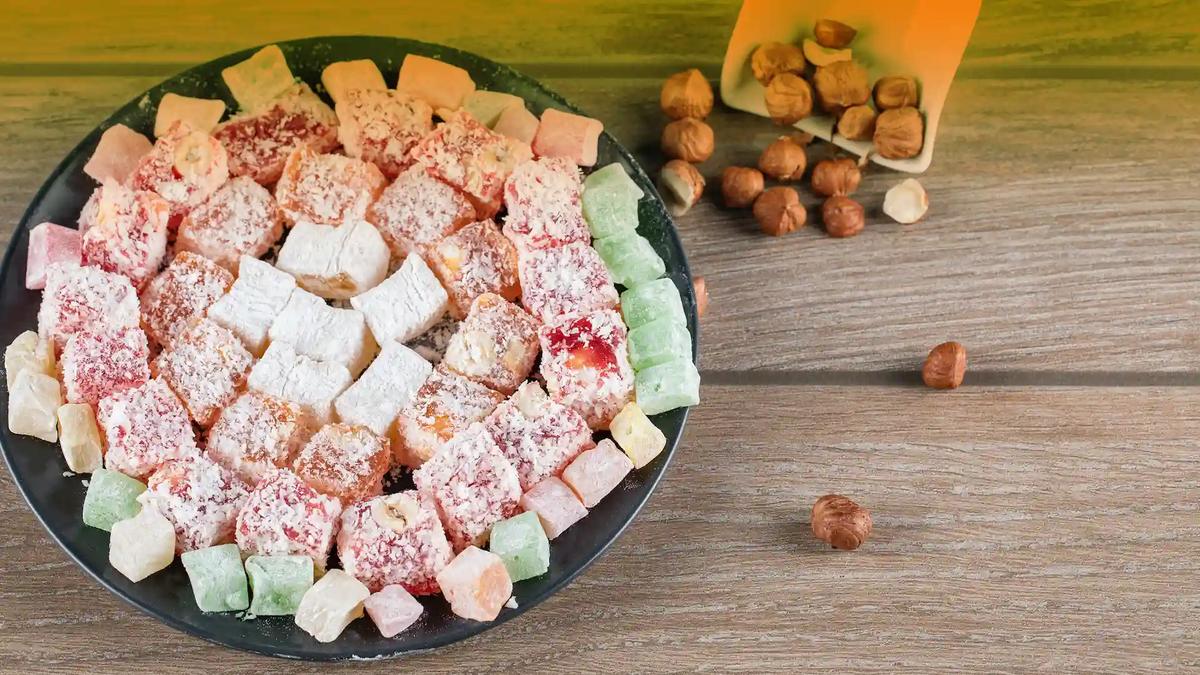
Cool cupboard, airtight container, never the fridge. Cold air dries the surface and turns a soft cube tough within days, which is the fastest way to ruin real turkish delight and waste good money.
Serving is where the whole thing makes sense. One piece with a small strong coffee, water alongside, ideally in the afternoon when nobody has anywhere to be. The sweetness and the bitterness cancel each other out almost exactly, which is presumably why the pairing survived two centuries.
As a gift
A turkish delight gift box is a genuinely good present for somebody who has everything, largely because it is impossible to buy for yourself without feeling slightly indulgent. Mixed boxes with several nut varieties travel better than single flavour ones.
For Eid, Christmas or a dinner party contribution, a turkish delight gift box lands better than another bottle of wine and costs about the same.
Where to buy it properly
Supermarket world food aisles have improved, though the range is usually thin. Turkish and Middle Eastern grocers carry the good brands, and for anyone outside London the practical option is to buy turkish delight online uk wide from a specialist rather than settling for whatever the local shop has.
Prices run from around four pounds for a modest box to fifteen or more for a large pistachio selection, and the difference in eating quality is honestly proportionate. Households that buy turkish delight online uk delivered usually end up ordering coffee at the same time, which tells you something about how it is meant to be eaten.
This kind of buying has gone mainstream faster than most people realise. The Grocer has reported that ninety five percent of UK households now purchase world cuisine products, and Kantar and Mintel have tracked world food spending rising by around eleven percent against 2023.
Give it another go
If the only version anyone has tried came out of a tin under a Christmas tree, the verdict was reached on faulty evidence. Good turkish delight is soft, fragrant and quietly addictive, and it costs very little to test the theory.
Start with a pistachio box and a pot of coffee. If a properly made turkish delight does not convert somebody, nothing will, and at least the coffee was nice.