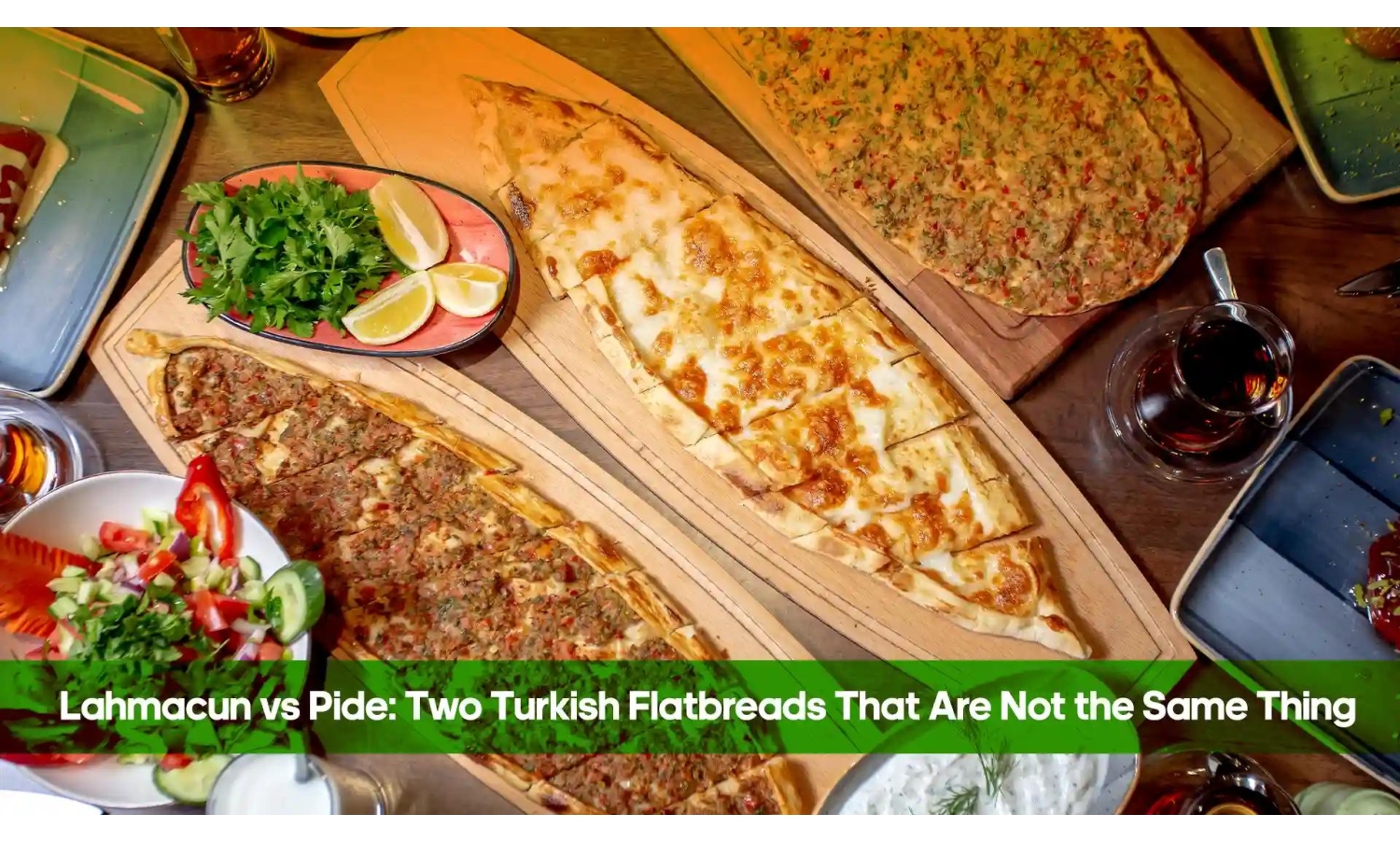

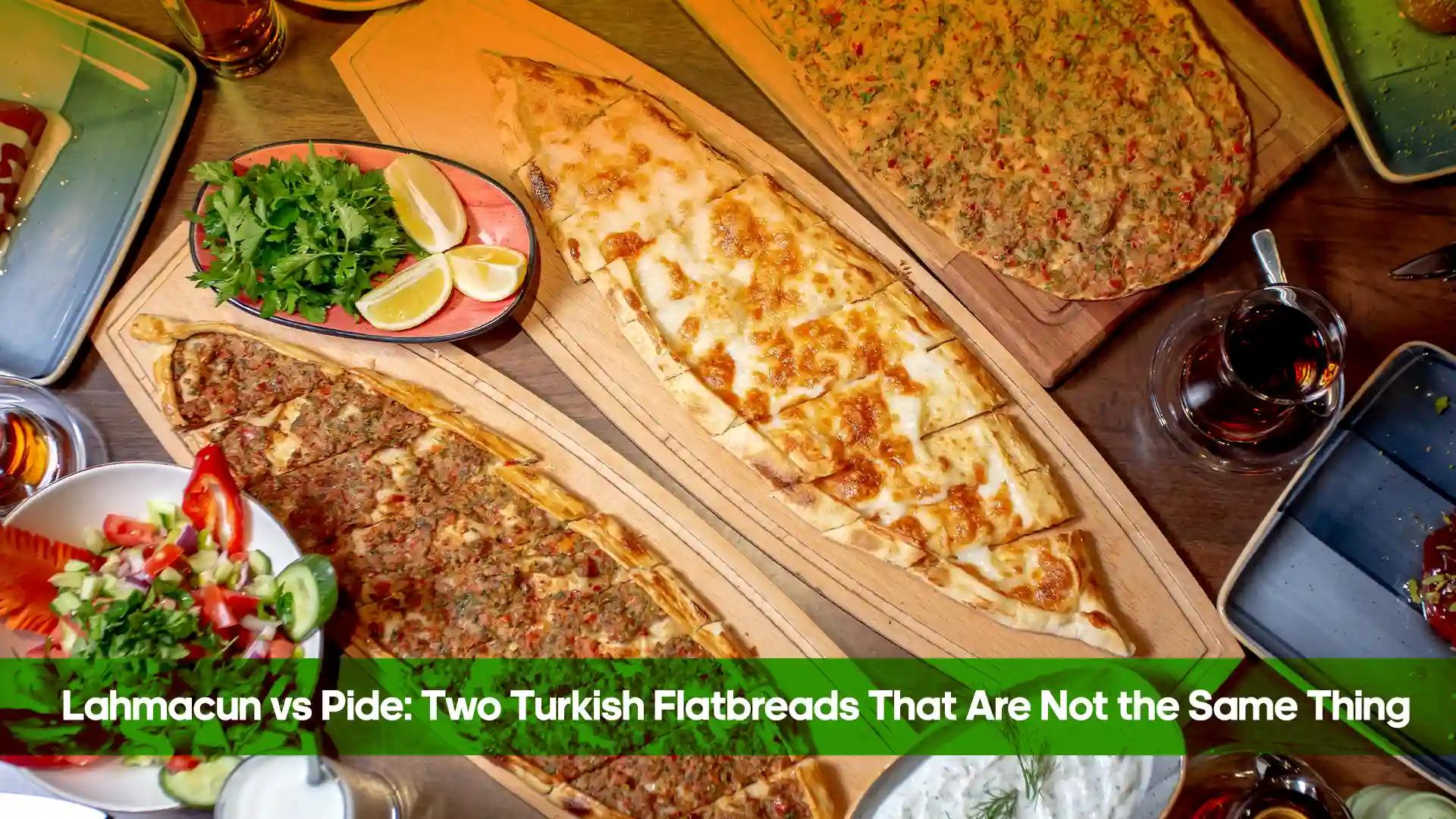
Order both at a Turkish restaurant and the confusion clears up in about four seconds. Until then, the lahmacun vs pide question causes a surprising amount of ordering anxiety, largely because British menus translate both of them as Turkish pizza and leave everybody to guess.
They are not versions of each other. Different dough, different shape, different thickness, different topping, eaten in completely different ways. One is a thin, fast, fold it and go street food. The other is a substantial, boat shaped, sit down meal.
The short answer
If it is thin, round, floppy and covered in a fine layer of minced meat, it is the first one. If it is thick, long, pointed at both ends and full of cheese or egg, it is the second. That is genuinely most of the lahmacun vs pide distinction sorted.
The rest is detail, and the detail is where the enjoyment lives. Most of the lahmacun vs pide arguments online are really arguments about dough thickness.
What is lahmacun
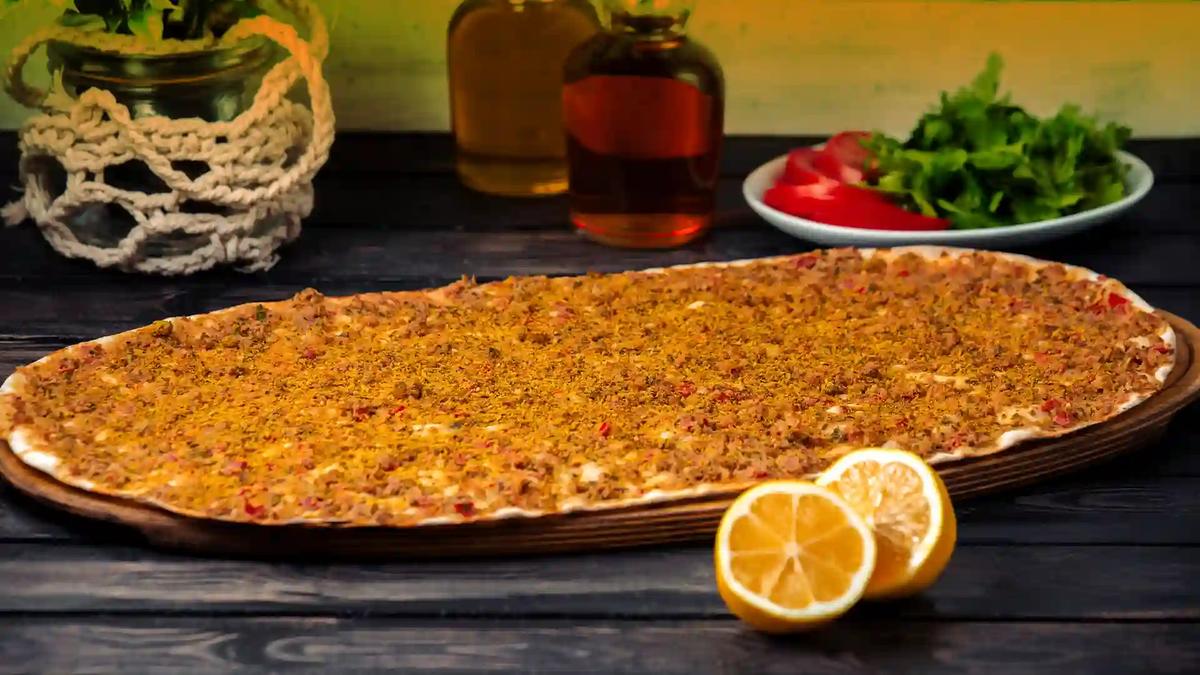
The answer to what is lahmacun is a very thin round of unleavened dough spread with a paste of minced lamb or beef, tomato, onion, parsley, garlic and pepper, then blasted in a fierce oven for two or three minutes.
The topping layer is thin. Almost shockingly thin, if you are used to a loaded pizza. It is meant to be, because the point is the contrast between a crisp edge and a chewy centre, not a mouthful of meat.
How to eat it
Nobody uses cutlery. Squeeze lemon over the top, lay a few sprigs of parsley and some sliced onion along the middle, roll it into a tube and eat it with your hands. Anyone wondering how to eat lahmacun in a restaurant should simply watch the next table and copy.
A plate of pickles or a glass of the salty yoghurt drink alongside is standard. Learning how to eat lahmacun properly takes about one attempt and the rolling technique sticks for life.
Price and portion
In Turkey it is street food pricing and most people eat two. In Britain it usually arrives as a starter, which misrepresents it slightly, because it is really a snack rather than a course.
What is pide
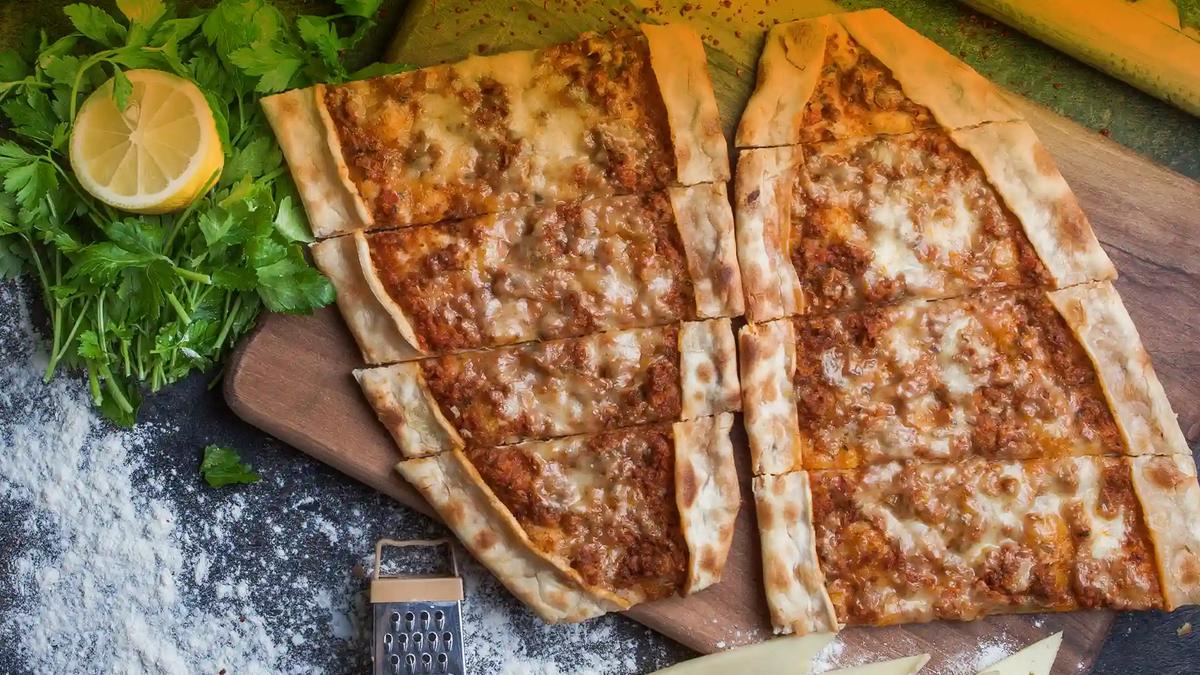
Ask what is pide and the shape gives it away. Leavened dough, rolled long and oval, topped generously, then folded at the sides and pinched at both ends so it comes out of the oven looking like a canoe.
The dough is thicker and softer, closer to a proper bread. It puffs at the edges and holds a filling rather than wearing one, which is the fundamental structural difference between the two.
The classic toppings
There are more turkish pide toppings than most menus bother listing, and the naming follows the filling rather than the region.
- Cheese, usually a stretchy melting cheese, sometimes with an egg cracked on top in the last minute.
- Minced meat with onion, tomato and pepper, the most common savoury version.
- Diced lamb with butter, the richer option that people order when they are hungry.
- Spiced cured sausage with cheese, which is the one that converts sceptics.
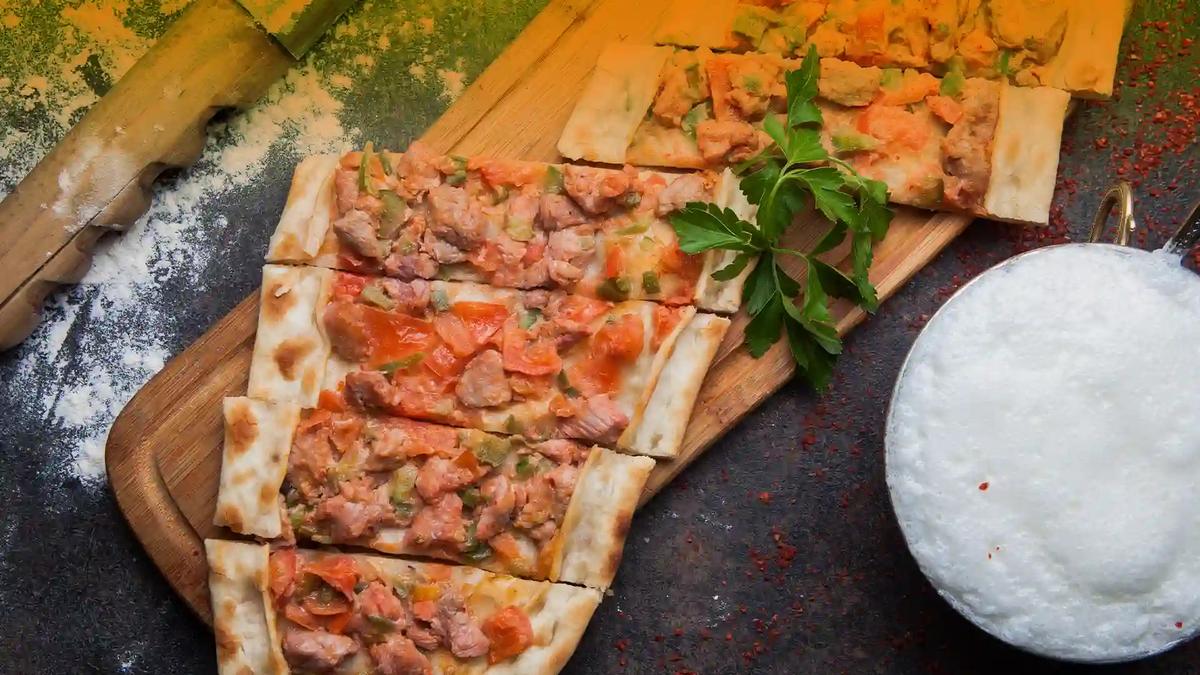
Among turkish pide toppings the cheese and egg version has quietly become the most photographed, mostly because of the runny yolk in the middle.
How it is served
Sliced into strips before it reaches the table, eaten with hands or a fork depending on how much butter is involved. It is a meal in a way that the thinner one is not, and one between two people is usually plenty.
So why does everyone lump them together
Because English lacks a better shorthand, and because turkish flatbread as a category covers an awkwardly wide range of things. It is not a helpful label though, and it sets up the wrong expectations entirely.
Pizza implies tomato sauce, melted cheese and a thick crust. Neither of these have all three. The closer comparison for the thin one is a very fine crisp bread, and for the thick one something nearer to a filled bread. Calling every turkish flatbread a pizza is a bit like calling every French pastry a croissant.
Restaurant owners in London have pointed out for years that the pizza comparison helps them sell the dish and then disappoints the customer who was expecting mozzarella. The lahmacun vs pide confusion largely starts there.
Making sense of it at home
Both are difficult to make properly at home for the same reason: domestic ovens do not get hot enough. A proper stone oven runs far hotter than a British cooker can manage, and that heat is what produces the blistering.
The workaround
Preheat a baking steel or heavy tray at maximum for at least forty minutes, then slide the dough straight onto it. It is not the same, but it is respectable, and it beats a soggy attempt on a cold baking sheet.
For most households, honestly, the frozen route is simpler. Frozen lahmacun uk stockists have improved enormously in the last few years, and a good frozen base cooked on a hot steel for four minutes gets you most of the way there for a fraction of the effort.
Worth knowing that frozen lahmacun uk shoppers buy tends to come part baked, so it needs less time than the packet suggests. Check it at three minutes.
Which one should you order
Depends entirely on appetite and company. For a light lunch, something to share before a main, or anything eaten standing up, the thin one wins every time. For a proper sit down dinner, particularly with people who arrive hungry, the boat shaped one is the better call.
A sensible table orders both. That is also the fastest way to settle the lahmacun vs pide debate for anybody who still insists they are the same dish with different names.
Ordering notes
Lemon is not optional on the thin one, it lifts the whole thing. Ask for extra parsley if none arrives. And do not let a turkish pizza description on the menu put you off ordering either, because the food underneath the label is usually excellent regardless of what the menu calls it.
The turkish pizza shorthand is slowly falling out of use anyway, as more British diners learn the actual names.
A category that keeps growing
None of this is niche any more. Kantar data shows that world cuisine still appears in only around eleven percent of in home meal occasions in Britain, which sounds small until you notice the spending growth attached to it, with total world food up roughly eleven percent against 2023 according to Kantar and Mintel figures.
Mintel research also found that seventy eight percent of world cuisine eaters are interested in regional dishes from cuisines they already like. Which is more or less exactly the appetite that the lahmacun vs pide question represents. People are past the point of wanting a generic version and have started asking for the specific one by name.
That is a good thing for everybody. Better questions get better food, and nobody has to order blindly and hope for the best any more. The lahmacun vs pide answer takes one meal to learn and then stays learned.